PDF vs physical coloring book: which format should you buy?
Most coloring books now come in two shapes: a file you print yourself and a bound book that arrives in the mail. The choice looks trivial until you are halfway through a page and the marker bleeds, the spine fights your hand or the printer runs dry.
This guide settles the PDF vs physical coloring book question by how you color, not by opinion. We sell every Motiv Colors title in both formats, so we have no reason to push you either way. Pick the one that fits your tools, your paper and the person you are buying for.
PDF or paperback: the short answer
Choose the PDF if you want to start tonight, color with markers or watercolor, reprint favorite pages or color on a tablet. Choose the paperback if you color mostly with pencils, have no printer or want a bound book ready to gift. Neither format is better overall. Each one wins a different job.
PDF (print at home)
Paperback (physical book)
Delivery
By email, within minutes
Printed and shipped by Amazon, a few days
Price, Motiv Colors
€18.40 on motivcolors.com
$13 to $15 list price on Amazon.com
Page size
US Letter and A4, resizable
8.5 × 11 inches (US Letter)
Paper
Whatever you choose, from copy paper to 300gsm watercolor sheets
Standard white book paper, 74–90gsm
Printing
Single-sided, by you
Single-sided, already done
Reprints
Unlimited, for your household
None, one copy of each page
Markers and watercolor
Yes, on heavy stock
Light markers only, wet media buckles
Digital coloring
Yes, in Procreate or any layered app
No
Returns
Final once downloaded
Amazon’s standard return policy
The content is identical in both: the same illustrations, the same dated captions, the same chronological order. What changes is the paper under your pencil and who does the printing.
When is a PDF coloring book the better choice?
The PDF wins whenever control matters. You choose the paper weight, the page size and the number of copies, which makes alcohol markers, gouache and watercolor possible. You can redo a page you ruined, print one scene twice to test a palette, and start coloring a few minutes after checkout.
Reprints change how you color. Experienced colorists print a test sheet of a Motiv Colors page, try two skin-tone or sky combinations on it, then commit on a clean copy. With a bound book there is no second attempt.
The PDF is also the only route to digital coloring. Import a page into Procreate, Photoshop, Krita or any app that opens PDFs, put the line art on its own layer and color underneath without printing anything.
And it travels. One purchase covers your household, so you can print the Greek Mythology pages for yourself and the same scenes again for a teenager who wants to join in.
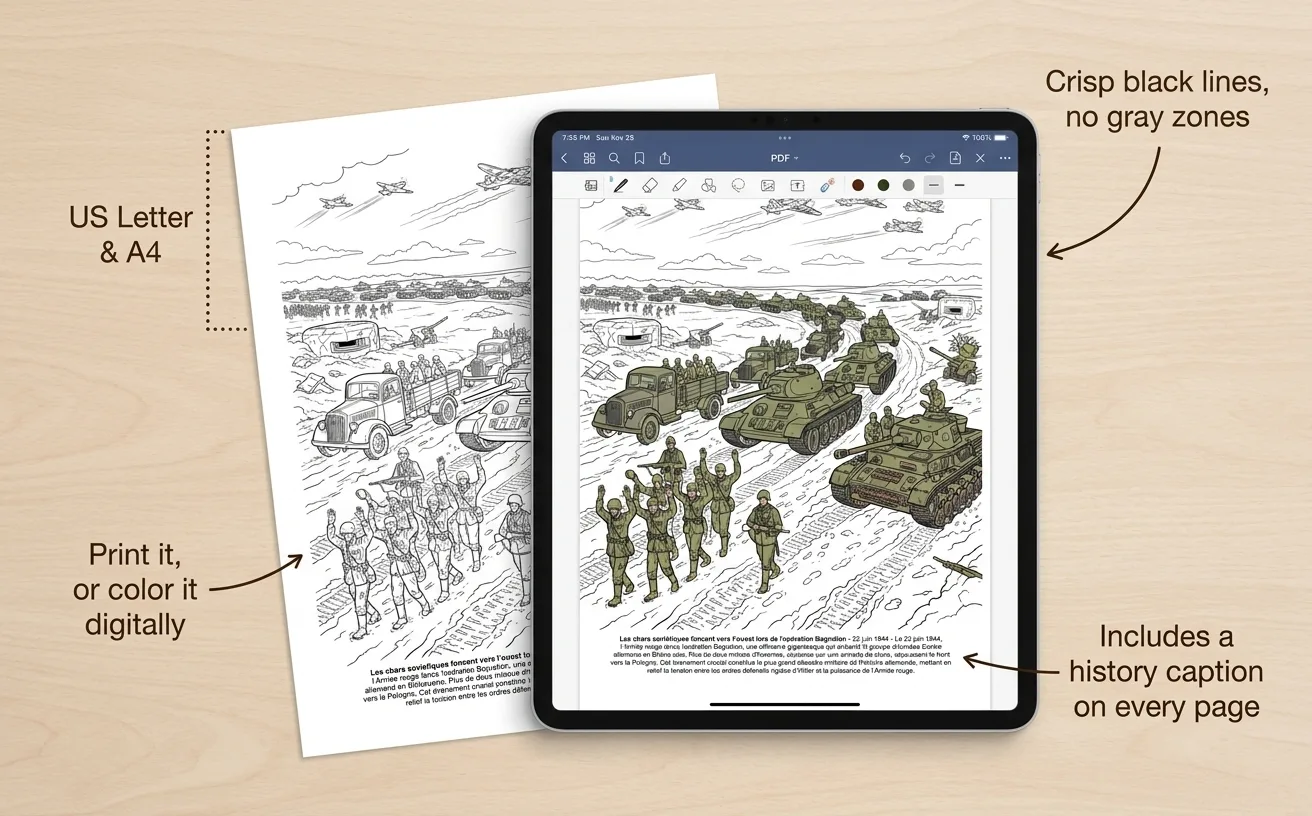
One PDF, two ways to color: printed at home or on a tablet.
When is a physical coloring book the better choice?
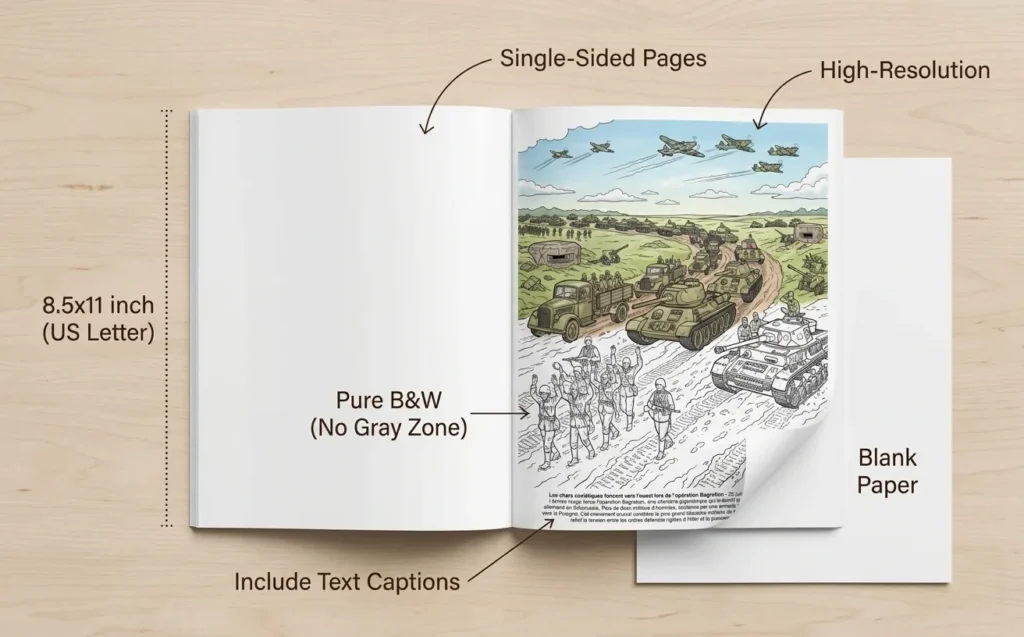
Choose the paperback if you color mainly with colored pencils, do not own a decent printer or want something ready to hand over as a gift. Our paperbacks are printed single-sided on 8.5 by 11 inch pages, so pencil pressure or a gel pen on one illustration never ruins the scene on the back.
Amazon prints them on demand on white book paper. Its own print specifications put black-ink interiors at 74 to 90gsm, lighter than the 120gsm we recommend for printing the PDF. That is fine for wax and oil pencils, fineliners and gel pens, and too thin for a wet wash.
The physical book has quieter advantages too. No ink cartridges, no paper jams, no loose sheets on the coffee table, and every page stays in story order on the shelf when you finish.
The one drawback is the spine. A glued binding makes it harder to color the inner edge of a page, so if that bothers you, slice the page out carefully along the spine with a craft knife and color it flat.
The paperback: single-sided, US Letter, a history caption on every page.
What does a PDF really cost once you print it?
A PDF is not free to print, but coloring pages are cheap pages. Line art is mostly white space, so each sheet uses far less ink or toner than a photo or a full-color document. The real cost is paper, and good 120gsm stock or cardstock costs more per sheet than office paper. It is worth it.
Set the printer before you start. Choose US Letter or A4 to match your paper, print single-sided at the highest quality setting, and pick actual size, or fit to page if your printer crops the edges.
Mind the printer type if you use alcohol markers such as Copic or Ohuhu. Alcohol reactivates inkjet ink and can drag the black lines into your color, while laser toner stays put. If you only have an inkjet, let the page dry overnight or test one corner first.
One housekeeping note: your Motiv Colors download link works three times. Save the file to your computer or cloud drive the first time, then print from your own copy as often as you like.
Which format for colored pencils, markers and watercolor?
Colored pencils and gel pens work in either format. Alcohol markers, water-based markers and watercolor need heavier paper than any paperback offers, so they point to the PDF printed on 200gsm stock or more. Digital coloring needs the PDF. The table below matches each medium to the format and the paper.
Your medium
Best format
Paper to print on
Wax pencils (Prismacolor)
Either
120gsm or heavier, smooth
Oil pencils (Faber-Castell Polychromos)
Either
120gsm or heavier, light tooth
Gel pens and fineliners
Either
Standard 100–120gsm
Water-based markers (Tombow)
PDF
160gsm or heavier
Alcohol markers (Copic, Ohuhu)
PDF, laser-printed
200gsm cardstock or marker paper, a scrap sheet behind
Watercolor and gouache
PDF
200gsm minimum, 300gsm watercolor paper if your printer feeds it
Procreate or Photoshop
PDF
None, color on screen
Pencil colorists can go either way, and many keep both: the paperback for the sofa, the PDF for the pages they want to frame. Print those on heavier stock and they hold up behind glass.
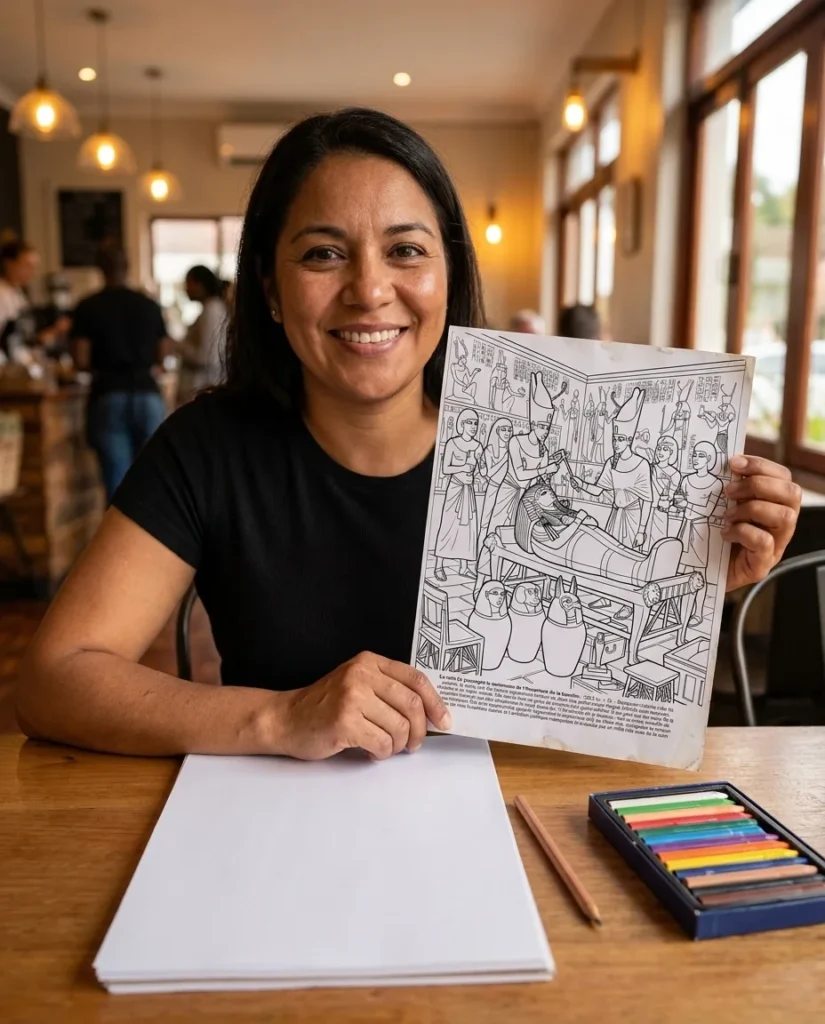
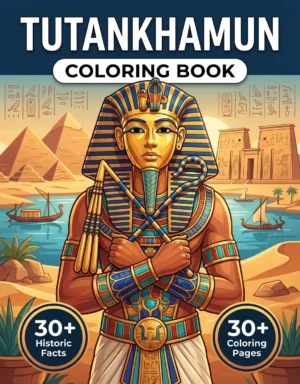
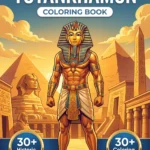
Tutankhamun, printed at home on heavier paper for pencils.
Get 5 illustrations from our bestselling coloring books, for free.
You will receive in your mail box the link to download the 5 illustrations in high quality and PDF format.
Same story, both formats: how Motiv Colors books work
Every Motiv Colors title exists as a PDF and as a paperback with identical content. Each one follows a single subject in chronological order across 25 to 30 detailed pages, with a short dated caption under every illustration. The PDF sells on motivcolors.com and the paperback on Amazon, and each product page links to the other.
The captions are the point. You color Howard Carter opening the tomb in 1922 and read why the find mattered, or German tanks rolling into Prague in March 1939 and learn what it ended. It is the reason history learned through coloring sticks better than history skimmed.
Every illustration starts as AI-generated art and is then checked and corrected by a person, scene by scene. Human Validated, no melting hands. If you are weighing us against an older publisher, we laid out how our history coloring books compare with Dover’s spec by spec.
One difference worth knowing: the two-book bundles, such as Tutankhamun with Cleopatra, are sold only as PDFs on our store.
The paperback is the easier gift for someone who never prints anything: it arrives bound and ready to wrap. The PDF is the faster gift and the more flexible one, since you can print it on beautiful paper yourself and hand it over the same evening. Choose by deadline and by the recipient’s printer.
A printed PDF needs a little care to feel like a present, not a forwarded email. Our guide on how to gift a printable covers paper, presentation and what to write in the card.
PDF vs physical coloring book: your questions answered
The questions colorists ask most before choosing a format.
Is it cheaper to print your own coloring pages?
Usually, once you own a printer. Line art uses little ink because the page is mostly white, so the main cost is paper. Good 120gsm paper or cardstock costs more than office paper, but you only print the pages you will color, and you can reprint any of them.
What paper should I print coloring pages on?
Use 120gsm or heavier for colored pencils, 160gsm for water-based markers, and 200gsm or more for alcohol markers and watercolor. Smooth paper suits wax pencils and markers, while a light tooth helps oil pencils layer. Always print single-sided.
Do markers bleed through coloring books?
Alcohol markers bleed through almost any book paper. Our paperbacks are single-sided, so bleed reaches a blank back rather than another illustration, but slip a scrap sheet underneath to protect the next page. For heavy marker work, print the PDF on 200gsm cardstock.
Can I color a PDF coloring book on an iPad?
Yes. Import the PDF page into Procreate, Photoshop, Krita or any app that opens PDFs, keep the line art on its own layer and color underneath it. Nothing needs printing, and you can still print the finished page later.
Can I print a PDF coloring book at a print shop?
Yes, for your own use. A copy shop can print on heavier paper than most home printers feed, which helps with watercolor and markers. Ask for single-sided printing at actual size on US Letter or A4.
Can I return a PDF coloring book?
Digital purchases are final once downloaded, because the file can be copied. The paperback follows Amazon’s standard return policy. If you are unsure, look through the preview pages on each product page before you buy.
Pick the format that fits your hands
If you color with pencils and want a book on the shelf, take the paperback. If you want markers, watercolor, a tablet or a second attempt at every page, take the PDF.
Either way the story is the same, scene by scene and date by date. Choose your subject first, then the format that suits how you color.
We use cookies to enhance your browsing experience, serve personalized content and analyze our traffic. You can accept all cookies, reject non-essential ones, or manage your preferences.
Required for the website to function and cannot be switched off. They are usually set in response to actions you make, such as setting privacy preferences or logging in.
Allow the website to remember choices you make (such as language or region) to provide enhanced, personalized features.
Help us understand how visitors interact with the website by collecting and reporting information anonymously.
Used to track visitors across websites to display relevant advertising and measure campaign effectiveness.