Learning History through coloring: why the facts stick
You finished a documentary on ancient Egypt last month. Name three things from it. Most people manage one, hedge on the second, and give up. Not because they were not paying attention, but because watching leaves almost nothing behind.
Learning history through coloring works on the opposite principle. You slow down, you handle one scene for forty minutes, and you build the memory instead of receiving it. Below is what the research actually says, what it does not say, and how to run a session that leaves something behind.
Why history slides out of your head
History fails to stick because most of the ways you meet it are passive. Reading a chapter, watching a series and scrolling an article all feel like learning while you do them, then leave a vague impression a week later. Nothing forced you to build anything, so your brain stored a summary instead of a memory.
Speed makes it worse. A documentary moves through the Valley of the Kings in ninety seconds; a page of text moves faster still. You never sit with one scene long enough for it to acquire any detail you can later reach for.
Now think about the last thing you genuinely remember learning. You almost certainly did something with your hands: cooked it, built it, drew it, argued about it. That is the pattern worth copying.
Does learning history through coloring actually work?
Yes, within limits. Coloring a researched historical scene while reading its caption pairs a visual memory with a verbal one and holds your attention on a single moment for far longer than reading does. It will not teach you causes, arguments or chronology on its own, but it makes specific scenes, figures and objects far harder to forget.
Three things happen at once when you color a historical page. You look harder than you ever would at an illustration you are only viewing, because you have to decide what every region of it is. You stay with it: forty minutes on one scene rather than four seconds. And you make decisions, which is the part that does the work.
Choosing the shade of a Roman legionary’s cloak sounds trivial. It is not. It forces you to ask what the thing is, which sends you back to the caption, which is exactly the loop passive reading never triggers.
What the drawing research actually found
The best-established finding is the drawing effect. Across seven free-recall experiments, Jeffrey Wammes, Melissa Meade and Myra Fernandes found that people recalled words they had drawn at more than twice the rate of words they had written out, and the quality of the drawing made no difference to the benefit.
Their explanation matters more than the number. Drawing builds a single memory that braids three strands together: the visual image, the hand movement that made it, and the meaning of the thing itself. Writing recruits one of those. That is the study as summarised at the time, published in the Quarterly Journal of Experimental Psychology in 2016.
Be careful with the transfer, though. Coloring an existing outline is not the same act as drawing one from scratch, so treat the drawing effect as the reason the mechanism is plausible rather than as proof about coloring books. The later review, “The Surprisingly Powerful Influence of Drawing on Memory”, is the honest place to read how far the effect has been tested.
You will also find blog posts claiming coloring “boosts recall by up to 65%”. That figure traces back to nothing you can read, so ignore it. The real case for coloring does not need a fake statistic.
Dual coding: why a picture plus a caption beats either one alone
Dual-coding theory, proposed by Allan Paivio in 1971, holds that you store visual and verbal information through two separate but linked systems. Encode a fact both ways and you leave yourself two routes back to it. Lose one, and the other still gets you there.
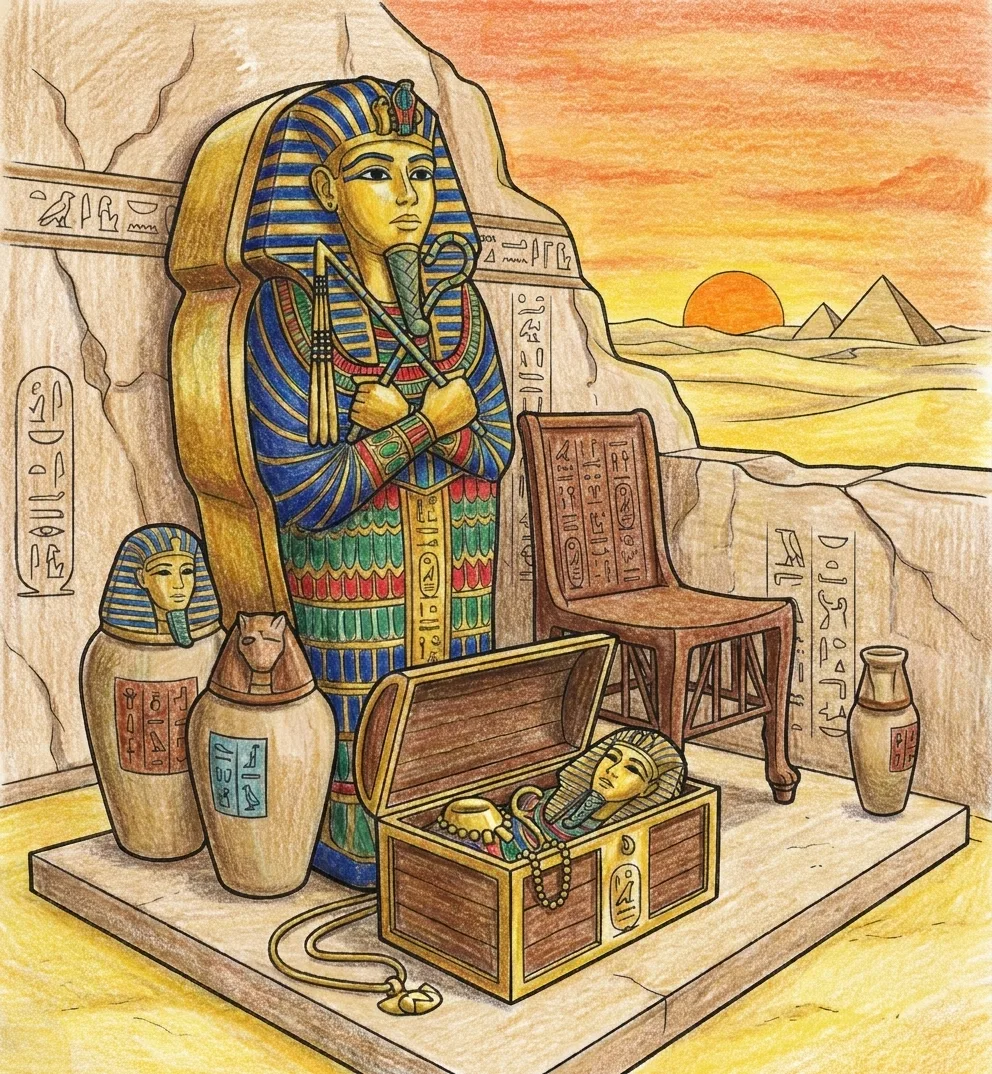
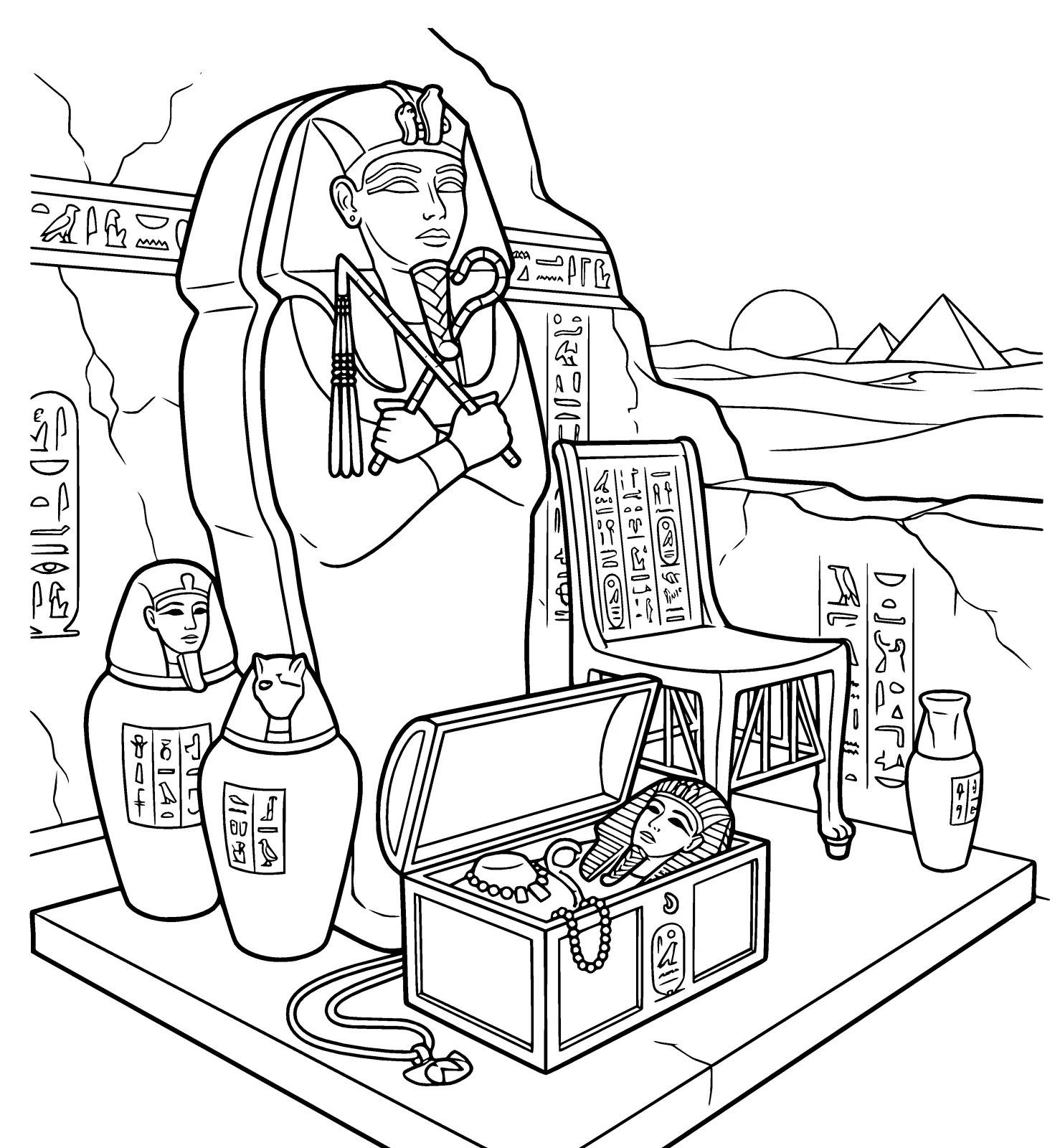
This is why the caption is not decoration. A page showing Tutankhamun’s burial chamber teaches you very little on its own; paired with a paragraph naming what was sealed inside it and when Howard Carter opened it, the image becomes a hook the words hang on.
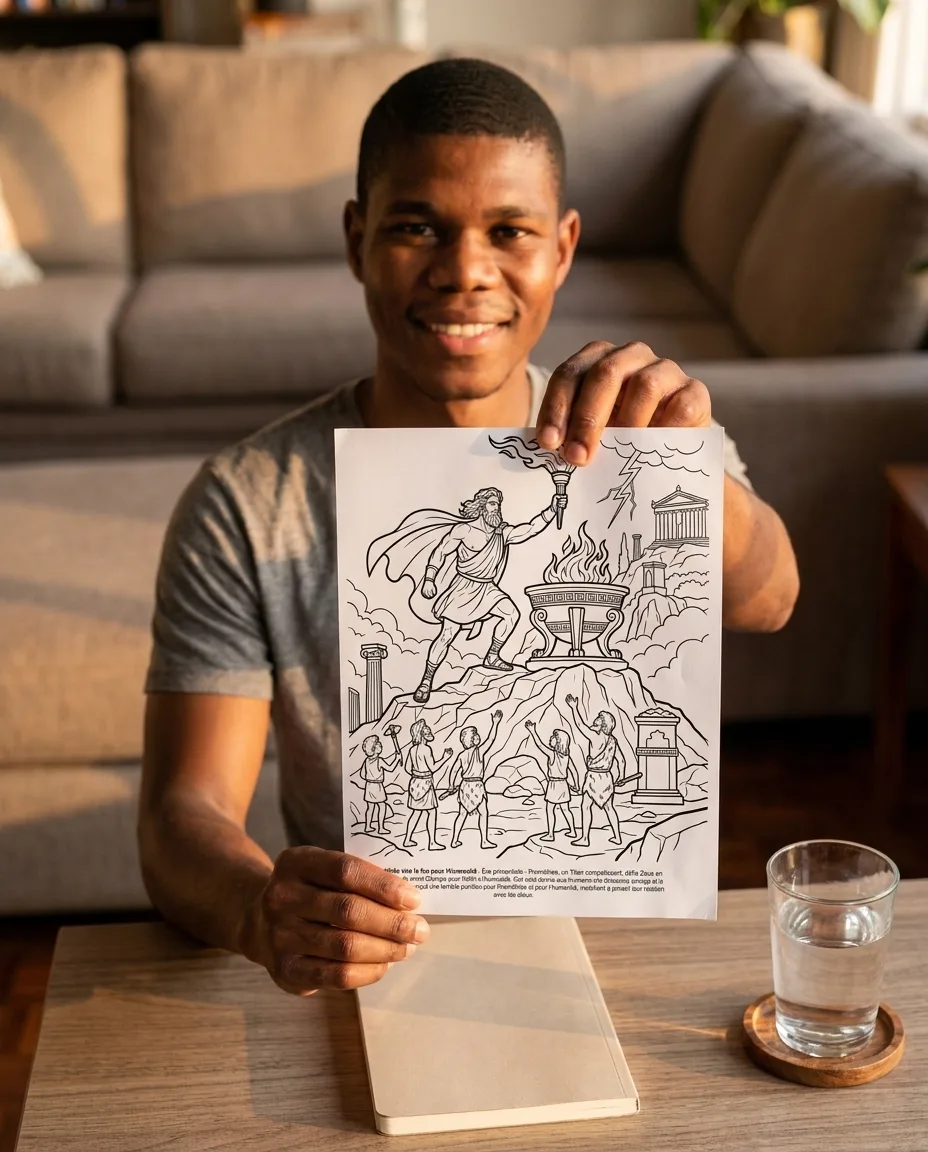
One scene, one caption: the page you work on for forty minutes.
It also explains the format that works and the one that does not. Pattern books give you nothing to encode verbally, and a wall of text gives you nothing to picture. Every Motiv Colors title runs 25–30 pages at roughly one paragraph of researched context per illustration, a 1:1 ratio, on purpose.
Order is what turns thirty facts into one story. A book that runs an era from beginning to end gives each page a place in a sequence, and a sequence is far easier to hold than a pile. Loose printable pages downloaded from six different sites never build that structure.
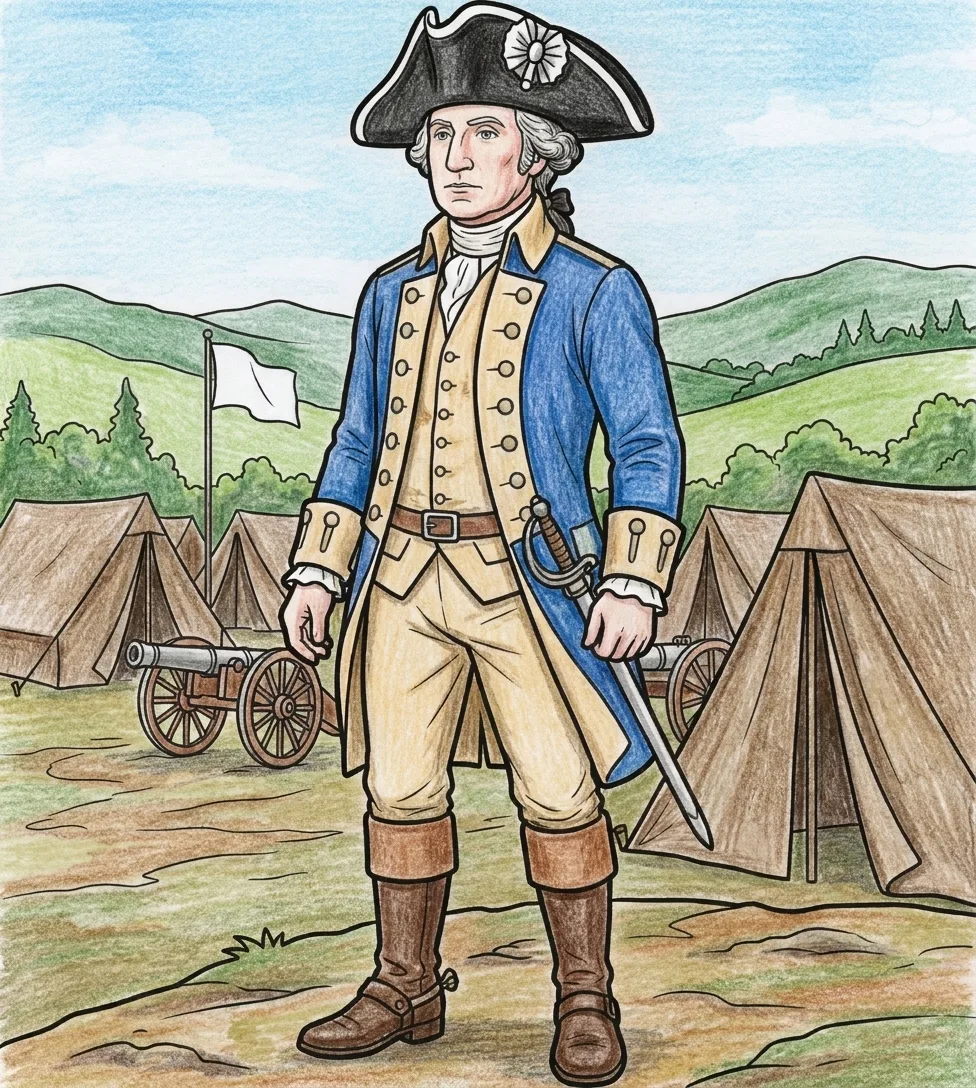
Work through the Revolutionary War in order and Lexington leads to Saratoga leads to Yorktown, each page carrying the last one forward. Color the same scenes shuffled and you get three disconnected pictures of men with muskets.
Format
What you get
What it misses
Free printable pages
A scene to color, at no cost
No context, no order, no verification of the history
Pattern and repetition books
Calm, and nothing else
Nothing to encode verbally, no subject to learn
A textbook chapter
Argument, causes, chronology
Nothing visual, nothing hands-on, easy to skim
A narrative history coloring book
Scene plus caption, in order, 25–30 pages
Depth of argument, pair it with real reading
Accuracy belongs in the same conversation. An illustration that invents a piece of armour teaches you the wrong thing beautifully, which is worse than teaching you nothing. Every page we publish is checked by a person before it ships.
How do you color a history book so you remember it?
Read the caption first, color second, then say the page back out loud before you start the next one. That order matters: reading first gives your hands something to think about, and recalling at the end turns a pleasant hour into retrieval practice, the single most reliable way to move a fact into long-term memory.
Read the caption before you touch a pencil. Ten seconds. You are loading the page with meaning before it becomes a shape.
Name what you are coloring as you go. “This is a shabti, not a toy.” Naming is the verbal half of dual coding, and it costs nothing.
Look one thing up. One question per page: what a hieroglyph says, why the ship is that shape. Curiosity you satisfy is curiosity you remember.
Finish the page in one sitting. Splitting a scene across three evenings splits the memory too.
Recall it out loud at the end. Close the book and say what happened in that scene. If you cannot, reread the caption. That failure is the useful part.
Go in order. The chronology is the spine. Skipping ahead costs you the story.
Colored pencil on 200gsm paper, slow enough that the caption stays in your head.
Your medium barely matters for retention, so use what you enjoy: colored pencils, markers, gel pens or a tablet all work. Pencils suit detailed historical line work best, simply because they let you stop and start without ruining an edge.
Who does this actually work for?
Anyone from about eight upwards, with different payoffs at each age. Children get a way into a period before they can read about it; teenagers get revision that does not feel like revision; adults get an evening that is restful and productive at once. The one group it fails is anyone who wants to cover ground fast.
Who
What it does for them
How to use it
Kids, 8–11
Builds a picture of an era before the reading level catches up
Read the caption to them, then let them work while you keep reading aloud
Reluctant readers
A way in that does not start with a wall of text
One page a night, caption first, no quiz afterwards
Teenagers
Revision with lower resistance than flashcards
Color the unit they are studying the week before the exam
Homeschooling families
A spine for a unit study, reprintable for each child
One title per unit; print a page per lesson at A4 or US Letter
Adults
Decompression that leaves something behind
Twenty minutes after dinner, phone in another room
Teachers
A resource that survives the school year
Reprint any page, any class, as often as you like
Buying for someone else changes the calculation slightly. Match the era they already care about rather than the one you think they should. Our guide to gifts for history lovers works through how to pick that, and there is a separate one for history teachers who need something they can use on Monday.
Get 5 illustrations from our bestselling coloring books, for free.
You will receive in your mail box the link to download the 5 illustrations in high quality and PDF format.
What coloring cannot teach you
Coloring teaches you scenes, objects, figures and sequence. It does not teach you causation, historiography or how to weigh competing sources, the parts of history that require argument. Anyone selling it as a complete history education is overselling it, and you should not believe them.
It is also slow by design. Forty minutes buys you one scene, which is a poor trade if you need to cover a century by Friday. Use it to anchor a period you are reading about elsewhere, not to replace the reading.
Pair it with something that supplies the argument. A collection catalogue from the British Museum or the Smithsonian, a good narrative history, or a documentary you watch while you color the matching era. That combination covers what neither half does alone.
Pick one era, print one page, and put your phone in another room. Twenty minutes is enough to finish most of a scene, and starting tonight beats scheduling a better session for the weekend. A PDF download lands in your inbox in minutes, so nothing has to arrive first.
Choose the era you already argue about. Motivation beats curriculum order every time.
Print single-sided on the heaviest paper you own. 160–200gsm stops markers bleeding through; plain copier paper is fine for pencils.
Reprint anything you ruin. The file is yours, so there is no page you can spoil, which is exactly why people relax into it.
Keep the finished pages in order. Stacked chronologically, they become a timeline you built by hand.
Stop at one page. Ending while you still want another is what gets you back tomorrow.
Do that four nights a week and you finish an era in a month. Not skimmed, but worked through, page by page, with the captions still in your head.
Learning through coloring: your questions answered
The questions people ask before they try it, answered straight.
Do coloring books help you learn and remember information?
They help with the visual and factual layer of a subject: scenes, objects, figures and the order things happened in. Coloring a researched illustration while reading its caption encodes the same fact visually and verbally, and holds your attention on one moment far longer than reading does. It will not teach you argument or causation.
Can an adult really learn history from a coloring book?
Yes, when the book carries real context rather than decorative pictures. A narrative historical coloring book runs 25–30 pages through one era in chronological order, with a paragraph of researched context beside each illustration. Adults use it the way they would a museum visit, to anchor a period they are also reading about.
What is the drawing effect?
It is the finding that people remember information they have drawn far better than information they have written down. Wammes, Meade and Fernandes reported recall of drawn words at more than twice the rate of written ones across seven experiments in 2016, and drawing skill made no difference. Coloring an existing outline is a weaker version of the same mechanism.
What age are history coloring books for?
From roughly age eight upward, including adults. Younger children work from the picture while an adult reads the caption aloud; teenagers use it as low-resistance revision; adults treat it as an evening that leaves something behind. The detail level, not the subject, is what sets the floor at about eight.
How do you use coloring books to teach history at home?
Run one title per unit and one page per lesson. Read the caption first, color second, then ask the child to say the scene back without looking. Because a Motiv Colors book is an instant PDF download, you reprint any page for each child and for each year: one purchase covers the whole family.
Is coloring better than rereading for revision?
For visual and factual material, it compares well, because rereading is one of the weakest study methods there is. It feels productive while building almost nothing. Coloring forces attention and ends in recall if you say the page back. For essay-based subjects, retrieval practice on the argument still beats both.
Put the era in your hands
Passive history evaporates. What survives is what you did something with: the scene you spent forty minutes deciding the colors of, the caption you reread because you could not tell what you were looking at.
Pick the era you never stop bringing up at dinner. Print the first page tonight, read the caption before you start, and say it back when you finish. That is the whole method. Everything else is which pencil you like.
We use cookies to enhance your browsing experience, serve personalized content and analyze our traffic. You can accept all cookies, reject non-essential ones, or manage your preferences.
Required for the website to function and cannot be switched off. They are usually set in response to actions you make, such as setting privacy preferences or logging in.
Allow the website to remember choices you make (such as language or region) to provide enhanced, personalized features.
Help us understand how visitors interact with the website by collecting and reporting information anonymously.
Used to track visitors across websites to display relevant advertising and measure campaign effectiveness.