History coloring books for homeschool: a grade-by-grade map
History is the subject your student can finish a chapter of and forget by dinner. Worksheets check whether they found the answer on the page, and a textbook assumes they wanted to read it in the first place.
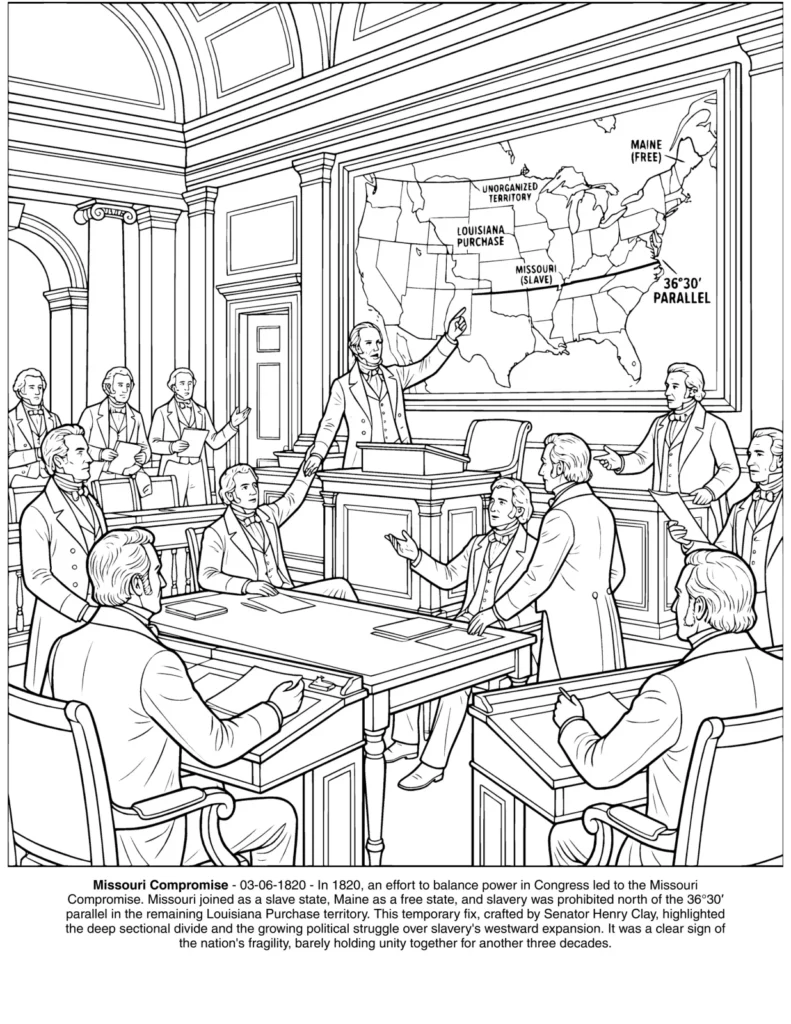
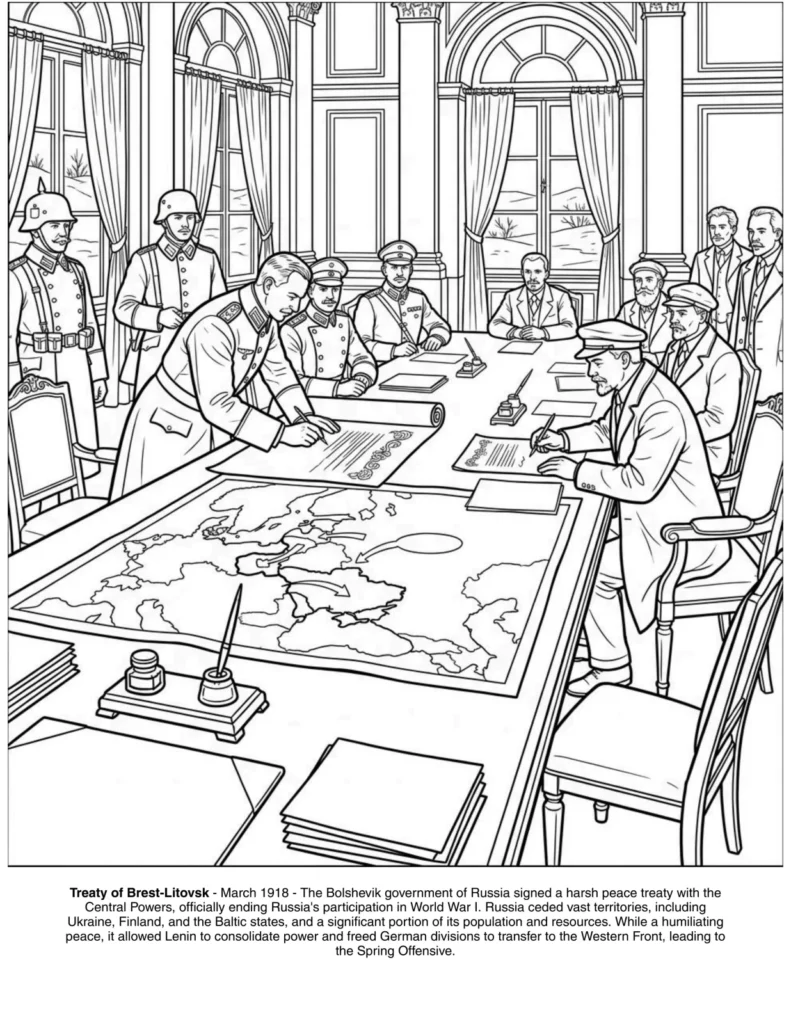
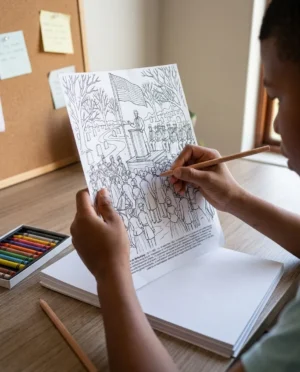
History coloring books for homeschool give you a third option: a scene to work on, a caption to read and a story that runs in order. Here is how each Motiv Colors title maps to what your student is studying, using the grade placements from real curricula.
Do history coloring books work in a homeschool?
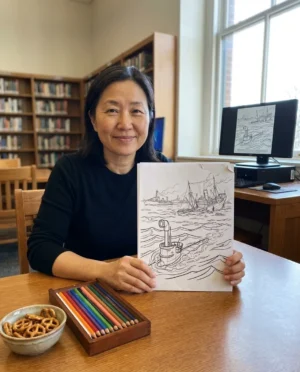
They work well as reinforcement, not as a full curriculum. Coloring a researched scene while reading its caption pairs an image with words and holds attention on one moment far longer than a worksheet does. Your student still needs reading, discussion and writing to learn why events happened.
The reasoning comes from dual-coding theory, proposed by Allan Paivio in 1971: information stored both as an image and as words leaves two routes back to it. Research on the drawing effect points the same way, although coloring an outline is not the same as drawing one. Our article on learning history through coloring sets out what the studies do and do not show.
The caption is what makes the format useful. Every Motiv Colors book pairs each illustration with real history and runs in chronological order, so your student colors the Boston Massacre before Lexington and Lexington before Yorktown. The sequence teaches itself while the pencils move.
Which history coloring books for homeschool fit which grade?
There is no single answer, because the United States has no national history sequence. California teaches ancient civilizations in grade 6, Core Knowledge starts Egypt in grade 1, and classical homeschoolers revisit it every four years. So match the book to the unit your student is in now, then use this table.
Core Knowledge shows why the grade column can only be a guide. It places ancient Egypt in grade 1, ancient Greece in grade 2, and the Maya, Aztec and Inca in grade 1, with a deeper unit in grade 5.
Which book goes with an ancient civilizations unit?
Start with Tutankhamun for Egypt, Greek Mythology for Greece, and the Maya or Aztecs for the Americas. Each title takes one civilization from beginning to end, so it works as a companion to a full unit rather than a one-off activity. Each PDF costs about €18 and reprints for every child.
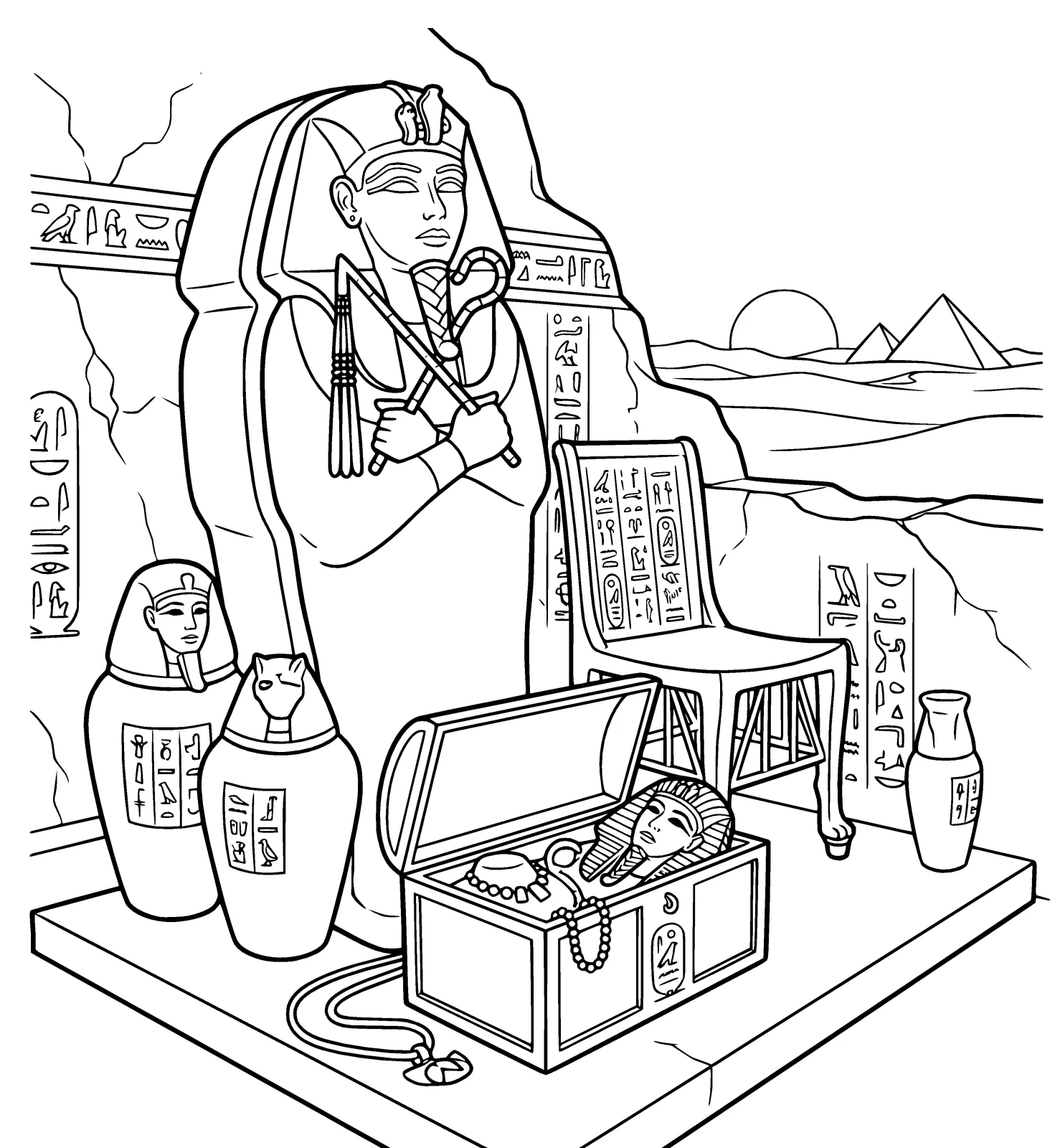
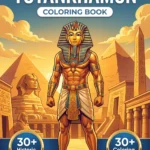
Tutankhamun gives you an entry point a student will actually follow: a nine-year-old takes the throne, dies at eighteen and is found by Howard Carter in 1922. Cleopatra picks up the end of the same civilization, with Caesar, Antony and the defeat at Actium in 31 BC.
A page from the Tutankhamun coloring book, ready to color.
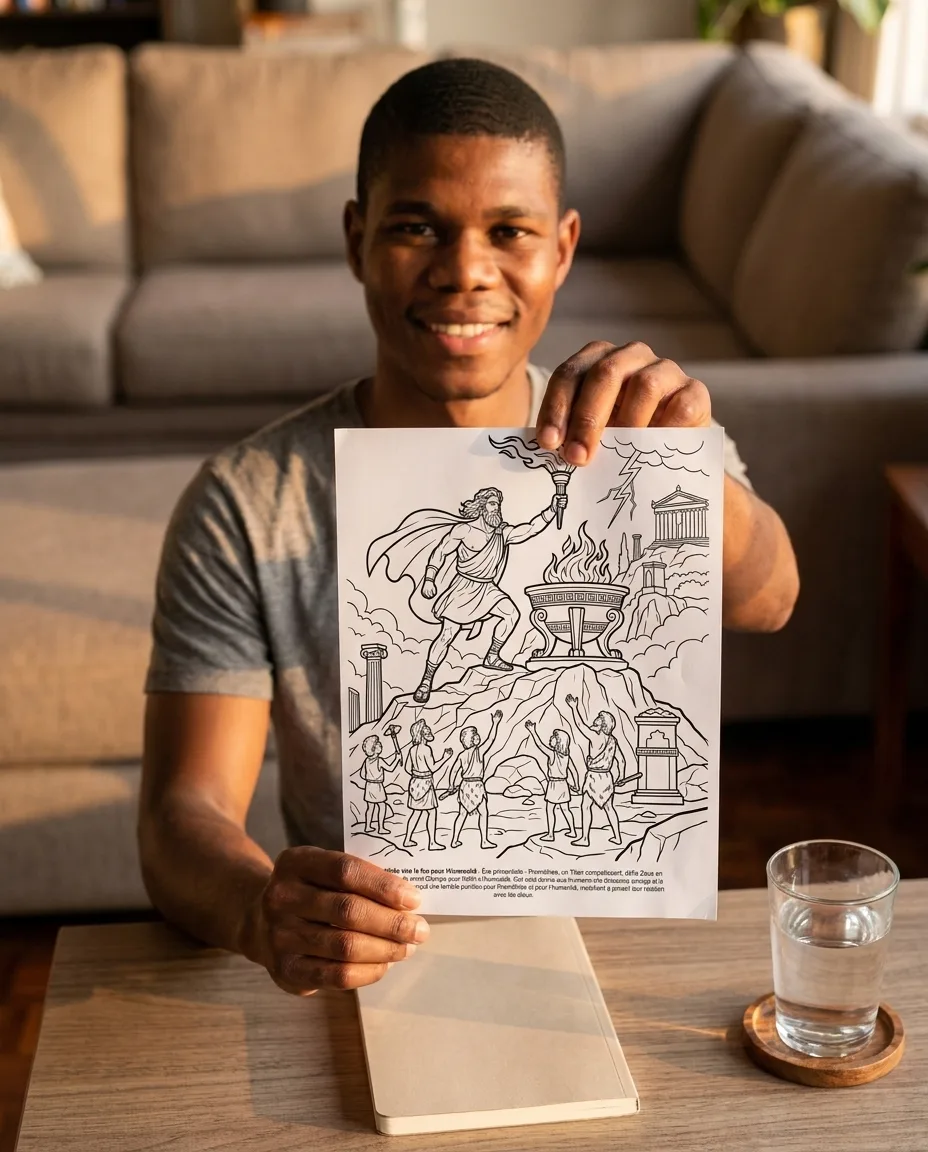
Greek Mythology moves from the Olympians through the Trojan War to the Twelve Labors, and it pairs naturally with a read-aloud of the Odyssey. The Maya book covers writing, calendars and the collapse of the southern cities around 900 CE. The Aztec and Inca titles carry the story through to the Spanish conquest.
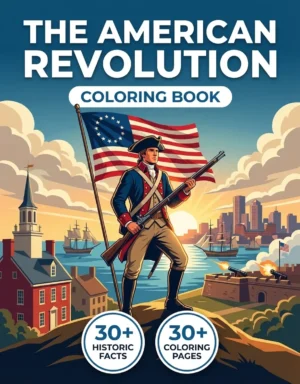
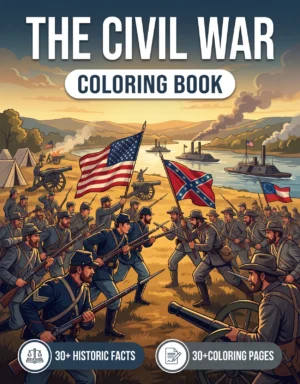
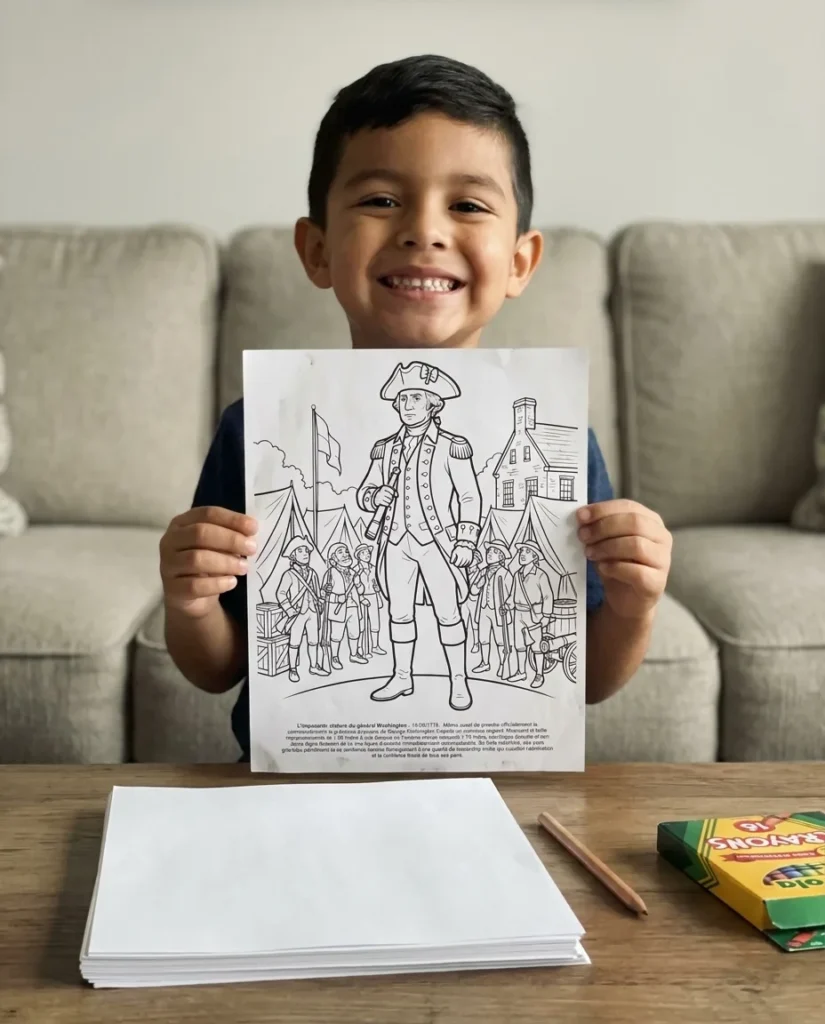
Use the American Revolution book for the founding and the Civil War book for the middle of the nineteenth century. Together they run from the Stamp Act to Appomattox in order, which suits a grade 5 to 8 sequence. You can buy the pair as a bundle for €29.90 or separately.
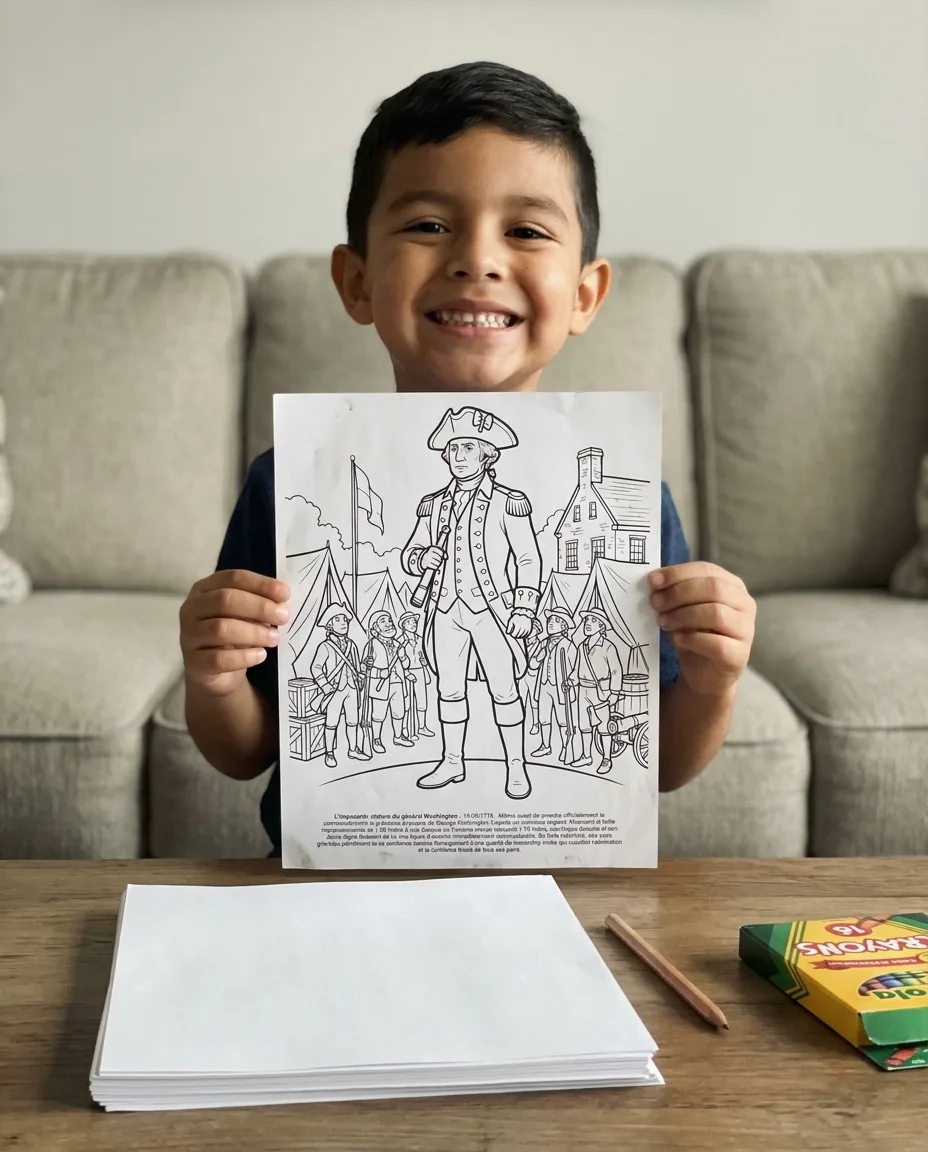
In the Revolution book your student follows the tax protests into the Boston Massacre, Lexington and Concord, Valley Forge, the French alliance and Yorktown. Our American Revolution timeline lists the dates, so older students can build a wall timeline as they go.
An early page of the Civil War coloring book.
The Civil War book moves from secession to Fort Sumter, Gettysburg, the Emancipation Proclamation and Appomattox. Pair it with the Civil War battles in order when your student needs the sequence of campaigns, and use each caption as the starting point for a short written narration.
What about the world wars with older students?
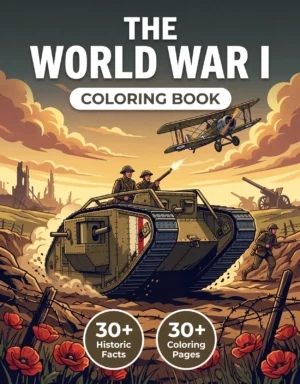
Save the First World War and World War II books for older students. Both are serious books about real suffering, and California places those wars in grades 10 and 11. Read through them yourself first, then print only the pages that suit your student and the unit you are teaching.
The First World War book covers Sarajevo, the trenches, the Somme, Verdun and the Armistice. Our WW1 timeline sets those events in order, which gives a student the raw material to explain how one war led to the next.
World War II runs to 60+ scenes for €29, so plan it across a whole unit. Assign the European and Pacific theaters as separate stretches, and let your student compare the captions with the main text.
Our books are made for teens and adults, so the line work is detailed and the captions are written for older readers. Many students from about age 10 can manage them with an adult choosing the pages. Younger children will do better with a simpler book, and that is fine.
The PDF format gives you control that a printed book cannot. Some scenes deal with battle, execution and sacrifice, including the Aztec Flower Wars and the death of Joan of Arc. Print the pages you have approved and leave the rest in the file until your student is ready.
Younger siblings can still join in with a single scene while you read the caption aloud. Keep it short, and stop before it becomes a chore.
How do you run a history coloring lesson?
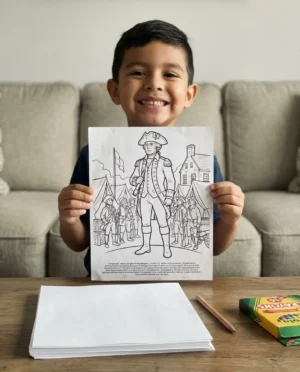
Read the caption aloud, talk about what the scene shows, color for 20 minutes, and finish with a spoken or written narration. The whole routine takes about half an hour, needs no preparation beyond printing one page, and fits neatly after a read-aloud or a chapter from your main history text.
Print one scene that matches this week’s reading.
Read the caption aloud before anyone picks up a pencil.
Ask two questions: who is in this picture, and what happens next?
Color for 20 minutes. Let your student choose the colors and defend the choice.
Narrate. Your student retells the event in their own words, without the caption.
File it. Add the page to a binder in date order, so the year builds into a timeline.
One printed scene, one caption, twenty minutes.
Narration is the step that turns coloring into learning. Asking a child to tell back what they heard is the practice Charlotte Mason built her method around, and a finished scene gives them something concrete to talk through.
Get 5 illustrations from our bestselling coloring books, for free.
You will receive in your mail box the link to download the 5 illustrations in high quality and PDF format.
Can coloring replace history worksheets?
Coloring can replace worksheets whose only job is to keep a student busy, but it cannot replace writing or analysis. Use a page instead of recall drills and fill-in-the-blank work, then keep essays and source reading for later stages. A student who enjoys the page is more likely to come back to the subject.
Sort your current materials by the job they do. This table shows where a coloring page earns its place and where it does not.
Job
Worksheet
Coloring page and caption
Verdict
Keep hands busy during a read-aloud
Poor fit
Strong fit
Replace
Fix a scene or figure in memory
Weak
Strong
Replace
Teach chronological order
Possible
Strong, if the book runs in order
Replace
Check specific facts
Strong
Weak
Keep the worksheet
Practice argument and evidence
Weak
None
Use essays and sources
Treat the page as the way into the discussion. Once your student cares about what happened at Valley Forge, the writing assignment gets easier to start.
How do they fit classical, Charlotte Mason or unit studies?
They fit all three because each book covers one subject in order. Classical families can assign a title to each year of the cycle, Charlotte Mason families can set a page beside a living book, and unit-study families can build a whole week around one civilization. No single method is required.
If you already use Story of the World or Sonlight, add a book as a companion rather than a replacement. Both already treat coloring as part of history, and ours go further for older students who have outgrown simple line drawings.
The same files work outside the home as well. Our list of gifts for history teachers shows how they fit a classroom.
What does it cost to use with several children?
One PDF covers your whole household. A single title costs about €18, the World War II book costs €29, and you can reprint any page for each child, every year, so the cost per student falls as your family uses it. The only ongoing expense is paper and a little ink.
A worksheet packet gets used once. A PDF goes back in the folder, ready for the next child when they reach the Maya. Use 120gsm paper for colored pencils and print only the pages you need that week.
Prefer a bound copy? The paperback costs about $15 on Amazon, although each child will need their own.
Homeschool history coloring: your questions answered
Are history coloring books good for homeschool?
Yes, as a companion to reading and discussion. A book that runs in order and pairs each scene with a caption reinforces what your student has read. It does not replace a curriculum or writing practice.
What age are Motiv Colors books suitable for?
They are made for teens and adults, with detailed line work and captions written for older readers. Many students from about age 10 can use them with an adult choosing the pages. Some scenes cover war and execution, so read them first.
Can I reprint pages for all my children?
Yes. Each PDF lets you reprint any page as often as you like, so every child in your household can color the same scene. Download the file once and keep a copy on your computer.
Which book should I start with?
Start with the unit you are teaching now, so the book reinforces this week’s reading. If you are between units, Tutankhamun is a strong first choice because the story is short and easy to follow. Greek Mythology works well alongside a read-aloud.
Are the illustrations historically accurate?
Each illustration starts with AI and a person then checks it against the history before it ships. Treat the pages as illustrations rather than primary sources. Comparing a caption with your main text makes a useful exercise for older students.
Color the unit you are teaching this week
You do not need a new curriculum to make history stick. Pick the unit you are already teaching, print one scene, read the caption together and let your student retell it. If that half hour works, the rest of the book is already in your folder, ready for next week’s lesson.
Start with one title and one page. The PDF arrives in minutes, so you can use it in tomorrow’s lesson.
We use cookies to enhance your browsing experience, serve personalized content and analyze our traffic. You can accept all cookies, reject non-essential ones, or manage your preferences.
Required for the website to function and cannot be switched off. They are usually set in response to actions you make, such as setting privacy preferences or logging in.
Allow the website to remember choices you make (such as language or region) to provide enhanced, personalized features.
Help us understand how visitors interact with the website by collecting and reporting information anonymously.
Used to track visitors across websites to display relevant advertising and measure campaign effectiveness.