Holy Week timeline: the last week of Jesus, day by day
Holy Week holds more of the Gospels than any other stretch of the life of Jesus. Roughly a third of their pages cover eight days, from the ride into Jerusalem to the empty tomb.
Here is the Holy Week timeline, day by day: what happens, where each Gospel tells it, and the name the Church gives each day. You also get the dates for 2027 and a simple plan to read one passage and color one scene each day from Palm Sunday to Easter morning.
Holy Week timeline at a glance
Holy Week runs from Palm Sunday to Holy Saturday, and Easter Sunday crowns it. Jesus enters Jerusalem on Sunday, clears the Temple on Monday, teaches and debates on Tuesday, is betrayed on Wednesday, shares the Last Supper on Thursday, dies on Friday, rests in the tomb on Saturday and rises on Sunday.
Day
What happens
Read it in
Church name
Sunday
Jesus rides into Jerusalem; crowds wave palm branches
Matthew 21:1-11; Mark 11:1-11; Luke 19:28-44; John 12:12-19
Palm Sunday
Monday
He curses the fig tree and clears the Temple
Matthew 21:12-22; Mark 11:12-19; Luke 19:45-48
Holy Monday
Tuesday
Debates in the Temple, parables, the widow’s offering, the talk on the Mount of Olives
Matthew 21:23-25:46; Mark 11:27-13:37; Luke 20:1-21:36
Holy Tuesday
Wednesday
Judas agrees to hand Jesus over for thirty pieces of silver
Matthew 26:1-16; Mark 14:1-11; Luke 22:1-6
Spy Wednesday
Thursday
The Last Supper, the washing of feet, Gethsemane, the arrest
Matthew 26:17-56; Mark 14:12-52; Luke 22:7-53; John 13-18
Maundy Thursday
Friday
The trials, the crucifixion at Golgotha, the burial
Matthew 27; Mark 15; Luke 23; John 18:28-19:42
Good Friday
Saturday
The tomb is sealed and guarded; the women rest
Matthew 27:62-66; Luke 23:56
Holy Saturday
Sunday
The tomb is empty; the risen Jesus appears
Matthew 28; Mark 16; Luke 24; John 20
Easter Sunday
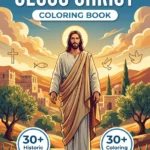
The Gospels do not always name the day, so some placements, Spy Wednesday above all, come from tradition and from reading the four accounts side by side. The Jesus Christ coloring book carries the two hinges of the week: the Last Supper and the Resurrection.
Palm Sunday: why does Jesus ride into Jerusalem on a donkey?
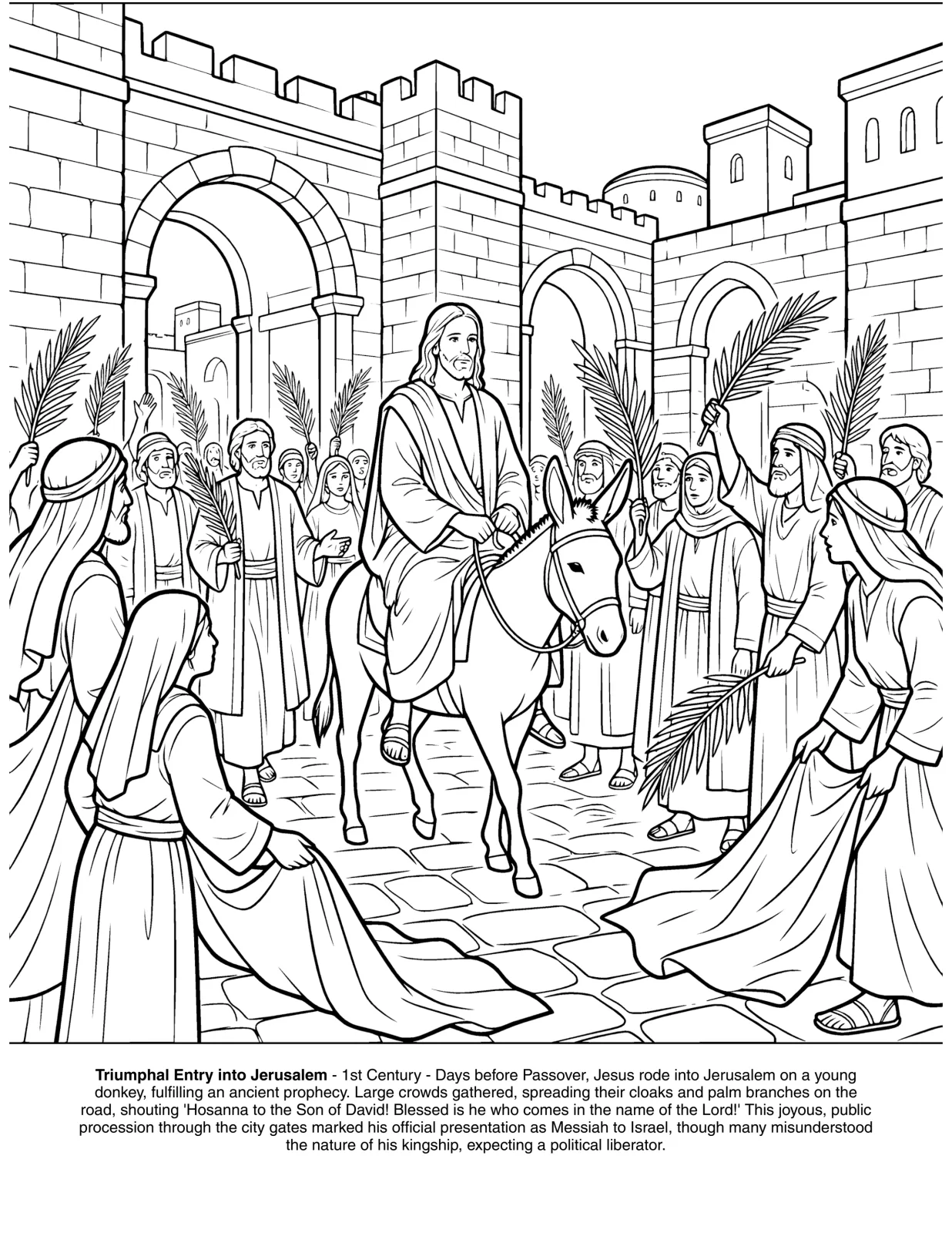
Jesus rides a donkey into Jerusalem to fulfil the prophecy of Zechariah 9:9, which promised a king coming humble and mounted on a donkey, not a warhorse. Pilgrims arriving for Passover spread cloaks and palm branches on the road and shout Hosanna, a cry from Psalm 118 meaning save us.
The scene is a public claim. A crowd greets a man from Galilee as the son of David, at the feast that celebrates freedom from Egypt, in a city held by Roman soldiers.
Luke adds a quieter moment. As the city comes into view from the Mount of Olives, Jesus weeps over Jerusalem. Many churches still bless palms on this Sunday and keep them until the next Lent, when they are burned for the ashes.
Monday and Tuesday: what happens in the Temple?
On Monday Jesus drives the money changers and dove sellers out of the Temple courts, quoting Isaiah and Jeremiah: a house of prayer made into a den of robbers. On Tuesday the authorities question him there all day, and he answers with parables, the tribute to Caesar and the greatest commandment.
The fig tree frames both days. On Monday morning Jesus finds it full of leaves and bare of fruit, and curses it. On Tuesday the disciples pass it withered from the roots, and he talks to them about faith and prayer.
Tuesday is the longest day in the Gospels. Jesus praises a poor widow who drops two small coins in the treasury, and in the evening, on the Mount of Olives, he speaks of the Temple’s fall and the end of the age.
What happens on Spy Wednesday?
On the Wednesday of Holy Week, by the most common reading, Judas Iscariot goes to the chief priests and agrees to hand Jesus over for thirty pieces of silver. Tradition calls it Spy Wednesday for that secret bargain. Matthew and Mark set it two days before Passover, right after an anointing at Bethany.
At Bethany, in the house of Simon the leper, a woman breaks a jar of costly perfume over the head of Jesus. Some at the table call it waste. Jesus says she has prepared his body for burial, and that her act will be told wherever the Gospel is preached.
Matthew alone names the price, thirty silver coins, the sum Zechariah links to a rejected shepherd. From then on, he writes, Judas watches for a chance.
Maundy Thursday: the Last Supper and Gethsemane
On Thursday evening Jesus shares the Passover meal with the twelve in an upper room. He washes their feet, gives them bread and wine as his body and blood, and foretells his betrayal. The name Maundy comes from the Latin mandatum, the new commandment of John 13:34: love one another.
After the meal they sing a hymn and walk to the garden of Gethsemane on the Mount of Olives. Jesus prays alone that the cup might pass from him, while Peter, James and John fall asleep three times.
Judas arrives with an armed crowd and greets Jesus with a kiss, the signal. Peter draws a sword, Jesus heals the wounded servant, and the disciples scatter into the dark.
The Last Supper has its own page in the Jesus Christ coloring book. Many people color it on Thursday evening, before or after the service, with candlelight colors: ochre, deep red, the warm brown of the table.
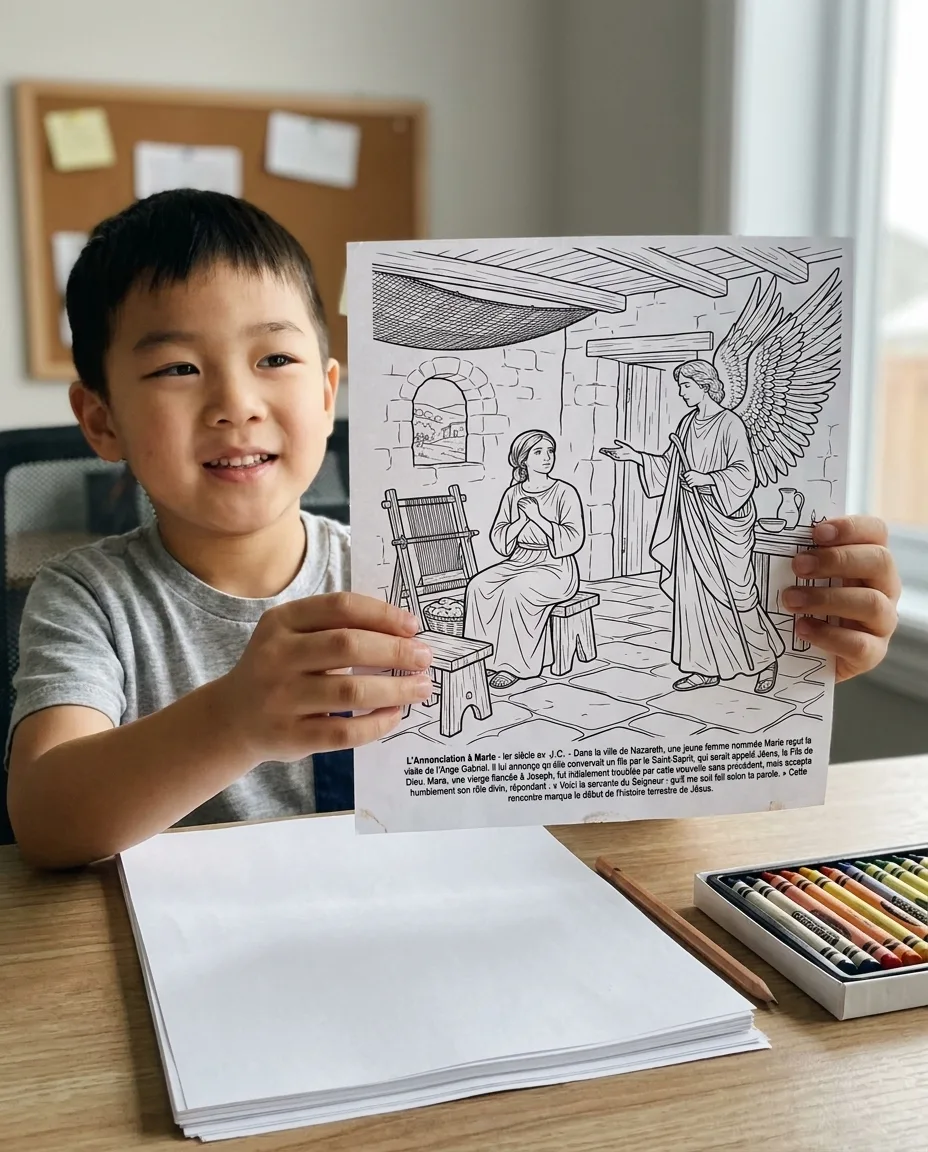
A scene from the Jesus Christ coloring book, ready to color.
Good Friday: from the trials to the cross
Good Friday begins in the night with the trials: before Annas, then Caiaphas and the council, then Pontius Pilate, who sends Jesus to Herod and back. Pilate offers to free a prisoner, the crowd asks for Barabbas, and Jesus is flogged and led to Golgotha, where he is crucified and dies around three in the afternoon.
In the courtyard Peter denies him three times before the rooster crows. On the road, the soldiers force Simon of Cyrene to carry the cross. Above Jesus, a sign in three languages reads King of the Jews.
The Gospels record seven sayings from the cross, among them Father, forgive them, and It is finished. Darkness covers the land from noon, and the curtain of the Temple tears in two.
Before sunset, when the Sabbath begins, Joseph of Arimathea asks Pilate for the body. With Nicodemus he wraps it in linen and lays it in a new tomb cut from rock, and a stone is rolled across the door.
Get 5 illustrations from our bestselling coloring books, for free.
You will receive in your mail box the link to download the 5 illustrations in high quality and PDF format.
Holy Saturday: the silent day
Holy Saturday is the day Jesus lies in the tomb. The Gospels say almost nothing: the women who prepared spices rest on the Sabbath as the law commands, and Matthew records that the chief priests have the tomb sealed and set a guard. For the followers of Jesus it is a day of grief and waiting.
The Church keeps it as the quietest day of the year. Many churches hold no Mass during the day, and the altar stays bare.
After dark, the Easter Vigil begins with a new fire and a single candle carried into a dark church. If you color through the week, this is a good day to leave the page blank, or to choose only grays and one small flame.
Easter Sunday: the empty tomb
Early on Sunday morning, Mary Magdalene and other women come to the tomb with spices and find the stone rolled away and the body gone. An angel tells them: he is not here; he has risen. That same day the risen Jesus appears to Mary in the garden, to two disciples on the road to Emmaus, and to the eleven.
Each Gospel tells it its own way. In John, Mary mistakes Jesus for the gardener until he speaks her name. Peter and the beloved disciple run to the tomb and find the linen cloths lying there.
The Resurrection closes both of our faith books. The Jesus Christ book ends on the empty tomb, and the Holy Bible book carries you there from Creation. For the whole road before this week, see the life of Jesus in chronological order.
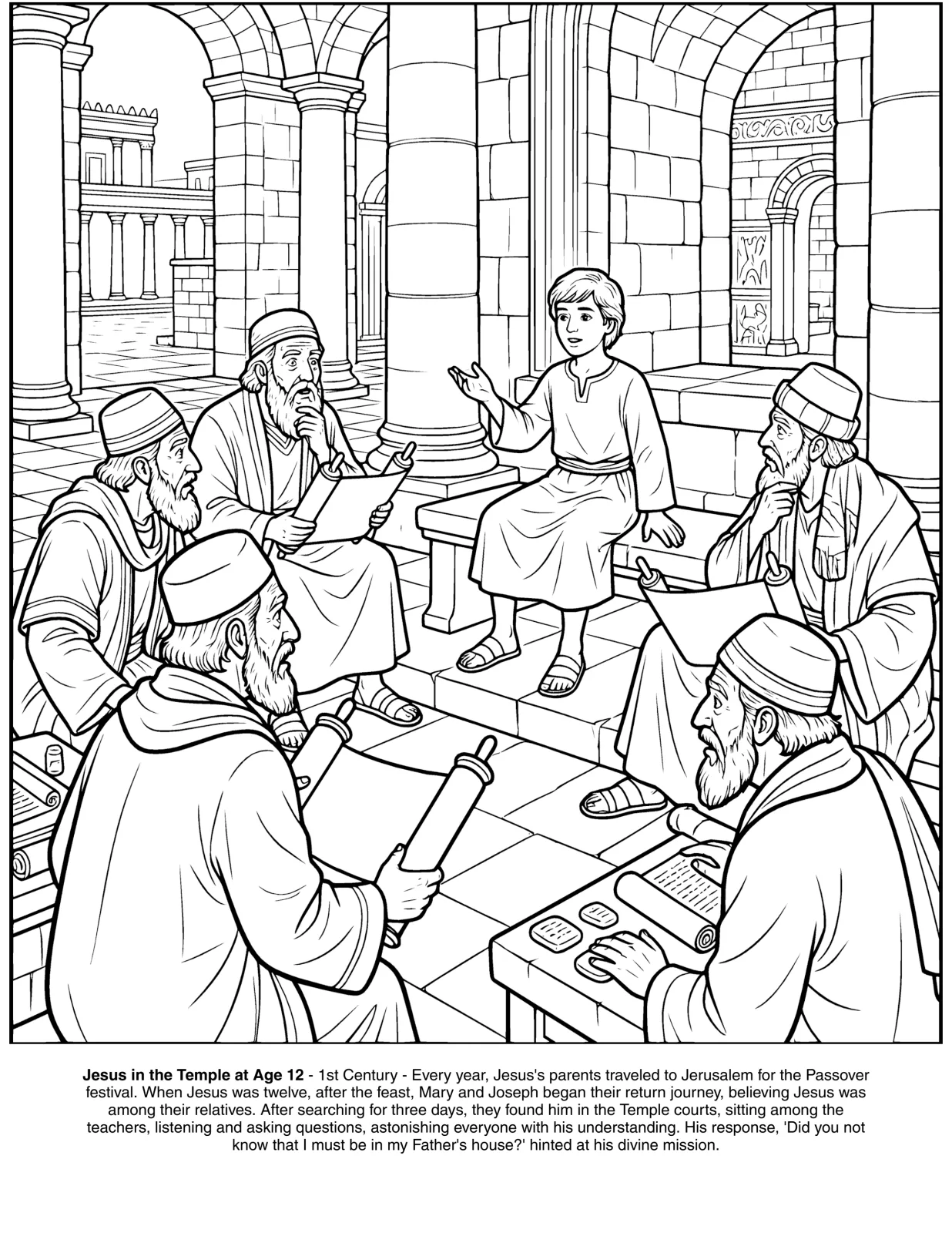
A page from the end of the Jesus Christ book, before color.
How can you walk through Holy Week one page at a time?
Read the day’s passage from the table, then color one scene for twenty minutes, no more. In 2027 Holy Week runs from Palm Sunday, March 21, to Easter Sunday, March 28. Print your pages the weekend before so the week holds no errands, only reading and color.
Keep one rule: color the scene of the day, not the next one. On Thursday you stay at the table; on Friday you stay at the cross. The slowness is the point.
Holy Week runs from Palm Sunday through Holy Monday, Holy Tuesday, Spy Wednesday, Maundy Thursday and Good Friday to Holy Saturday. Easter Sunday follows and closes the week.
When is Holy Week in 2027?
In 2027 Holy Week runs from Palm Sunday, March 21, to Holy Saturday, March 27, and Easter Sunday falls on March 28 in Western churches.
Why is it called Maundy Thursday?
Maundy comes from the Latin mandatum, commandment. At the Last Supper Jesus gives his disciples a new commandment, to love one another as he has loved them (John 13:34).
Why is Good Friday called good?
Most scholars read good in its older English sense of holy. For Christians the day is good because the death of Jesus on the cross leads to the Resurrection on Easter Sunday.
How long was Jesus in the tomb?
From Friday evening to before dawn on Sunday. Counted the way the Gospels count, inclusively, that covers parts of three days, so Jesus rises on the third day.
Is there a coloring book of the life of Jesus for adults?
Yes. The Jesus Christ coloring book by Motiv Colors follows his life in order across 30+ detailed scenes, from the Nativity and the miracles to the Last Supper and the Resurrection, with a caption on every page. It is an instant PDF you print at home.
Spend Holy Week with the story in your hands
Eight days, eight passages, eight scenes. Read slowly, color slowly, and by Easter morning you will know the week the way the Gospels tell it, in order.
Print the first page before Palm Sunday and begin at the gates of Jerusalem.
We use cookies to enhance your browsing experience, serve personalized content and analyze our traffic. You can accept all cookies, reject non-essential ones, or manage your preferences.
Required for the website to function and cannot be switched off. They are usually set in response to actions you make, such as setting privacy preferences or logging in.
Allow the website to remember choices you make (such as language or region) to provide enhanced, personalized features.
Help us understand how visitors interact with the website by collecting and reporting information anonymously.
Used to track visitors across websites to display relevant advertising and measure campaign effectiveness.